
Example of a job and employment scam

What are Job & Employment Scams?

Job and employment scams use fake job offers to steal your money or personal information.

Scammers may:

  • Pretend to be real employers
  • Promise unusually easy work
  • Offer high pay for low effort tasks

  • Knowing the warning signs can help you protect yourself.

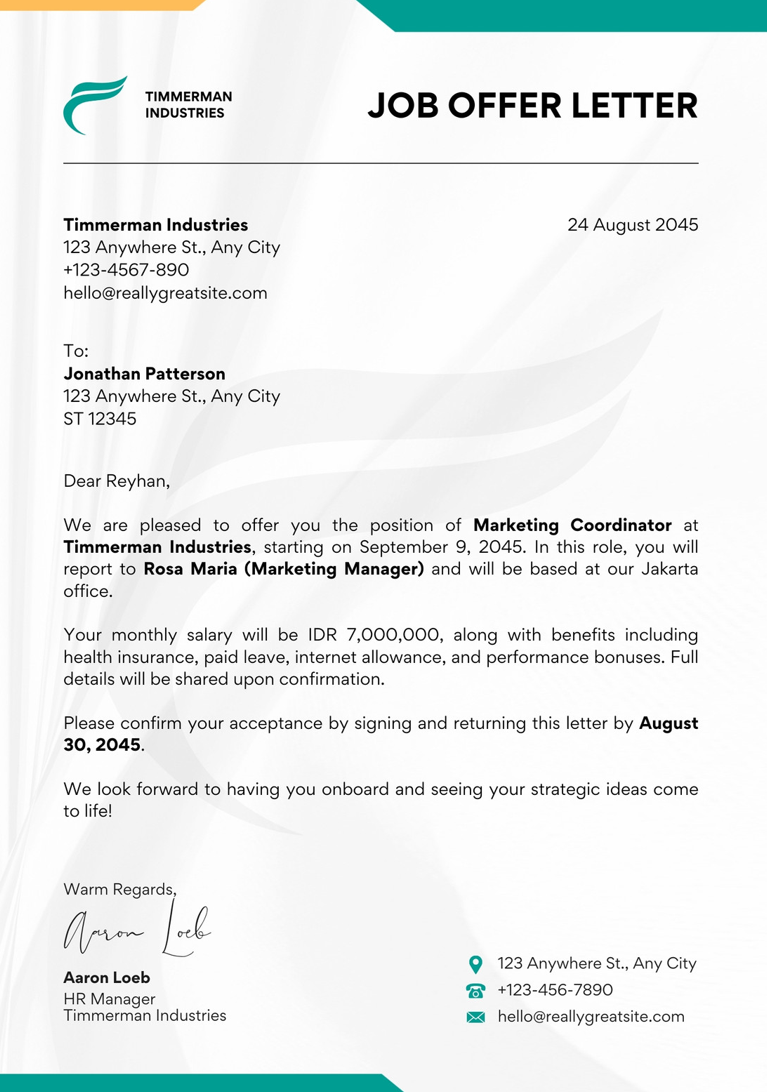
Legitimate Example

Example illustrating a legitimate job opportunity

A real employer explains the job duties, pay, and hiring process clearly.
You can verify the company through its official website, and legit employers will typically reach out over email rather than messages.
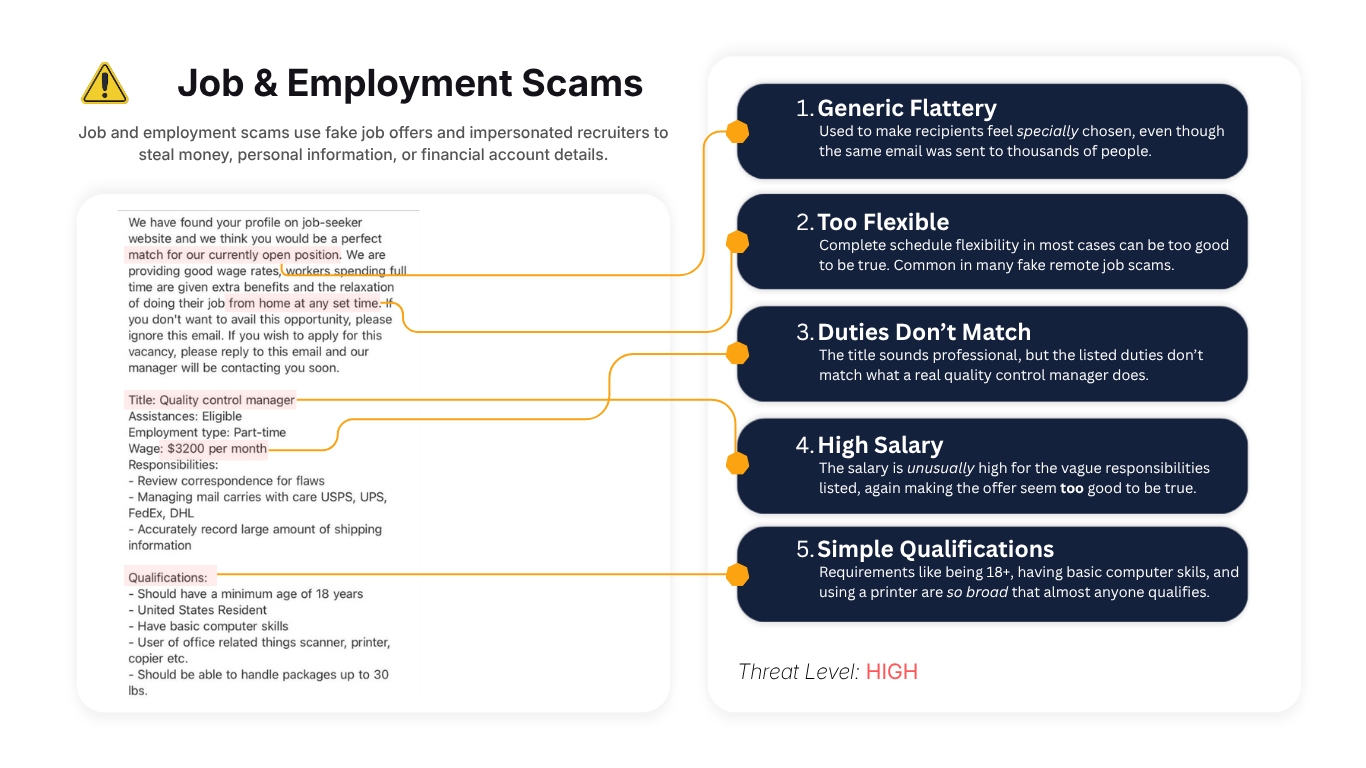
Scam Example

Example illustrating a suspicious job offer

A scammer may offer unusually high pay, promise a job without an interview, or demand an upfront fee. Requests to deposit a check and return part of the money are major warning signs.


Remember: if it looks too good to be true, it most likely is a scam.

How Job & Employment Scams Work

Scammers pretend to offer real work to gain your trust. They then try to get your money, banking details, or personal information.


1. A Fake Job Offer

You see a job advertisement, receive an unexpected message, or get contacted by someone claiming to be a recruiter.

2. A Request for Money or Details

The scammer asks for an upfront fee, banking information, identity documents, or a payment through a fake check scheme.

3. Money or Information Is Stolen

After you pay or share your details, the scammer may disappear, steal your money, or misuse your identity.

Common Spaces

Fake job offers can appear in many places, including:


  • Online job boards and career websites
  • Social media posts and groups
  • Unexpected emails, texts, and messaging apps

Common Targets

Anyone looking for work can encounter a job scam. Scammers may target people who:


  • Are unemployed or changing careers
  • Need extra income or remote work
  • Are seeking their first job or returning to work

However, it's important to know that anyone can fall victim.

What To Do

If a job offer seems suspicious, take these steps:


  • Stop communicating before sending money or details
  • Verify the employer through its official website
  • Report the offer at reportfraud.ftc.gov
Warning Signs / Red Flags
  • Upfront payments: You must pay for training, equipment, background checks, or a job placement before you can start.
  • Fake checks: You are sent a check to deposit and told to send some money back or buy supplies. The check may later bounce, leaving you responsible for the money.
  • Unrealistic offers: The job promises unusually high pay for very little work or offers you a position without a proper hiring process.
  • Requests for personal information: Someone asks for your Social Security number, banking details, or identity documents before you can verify the employer and the job.
  • Pressure to act quickly: The recruiter insists you must pay or share information immediately to secure the position.
  • Suspicious contact details: Emails use personal accounts instead of official company addresses, or the recruiter avoids answering basic questions about the job.
How to Stay Safe
  • Research the employer: Find its official website and contact the company using details listed there, not contact information supplied by a suspicious recruiter.
  • Never pay to get a job: Be cautious of requests for upfront fees, gift cards, cryptocurrency, or money transfers.
  • Never return money from a check: Do not deposit a check and send part of the money elsewhere, even if your bank shows the funds as available.
  • Protect your personal information: Do not share your Social Security number, bank details, or identity documents until you have verified the employer and have a legitimate reason to provide them.
  • Read the offer carefully: Check the job duties, pay, company details, and hiring process. Ask questions if anything is unclear.
  • Take your time: A trustworthy employer should allow you to review an offer without pressuring you to act immediately.
What To Do If You've Been Scammed
  1. Stop contact and payments. Do not send more money or share additional information, even if the scammer promises to fix the problem or return your money.
  2. Contact your bank or payment provider. Explain what happened and ask whether a payment can be stopped or reversed. If you deposited a suspicious check, tell your bank immediately.
  3. Protect your accounts and identity. Change any exposed passwords. If you shared your Social Security number, visit IdentityTheft.gov for recovery steps.
  4. Report the scam. File a report with the Federal Trade Commission (FTC). If the scam involved online messages or a website, you can also report it to the FBI's Internet Crime Complaint Center.
  5. Save the evidence. Keep messages, emails, job advertisements, receipts, payment records, and the recruiter's contact details. These may help your bank or investigators.

Being scammed can happen to anyone. Acting quickly may help limit the damage, and reporting the incident can help protect others.

Quick Checklist

Frequently Asked Questions

Can a real employer ask me to pay for a job?

Be very cautious if an employer demands payment to secure a position, receive a paycheck, or begin work. Requests for upfront fees are a common scam warning sign. Verify any required costs independently before paying.

What if I already deposited a check from a recruiter?

Contact your bank immediately and explain that the check may be fraudulent. Do not spend the money or send any of it to the recruiter. Even if the funds appear in your account, the check may later be rejected, and you could be responsible for the loss.

How can I tell if a job offer is real?

Look up the company independently, confirm that the job appears on its official careers page, and contact its hiring team using verified contact details. Be suspicious of unrealistic pay, pressure to act quickly, requests for upfront payments, or demands for sensitive information before the employer is verified.


Don't wait until it happens to you.

Start Checking Messages