
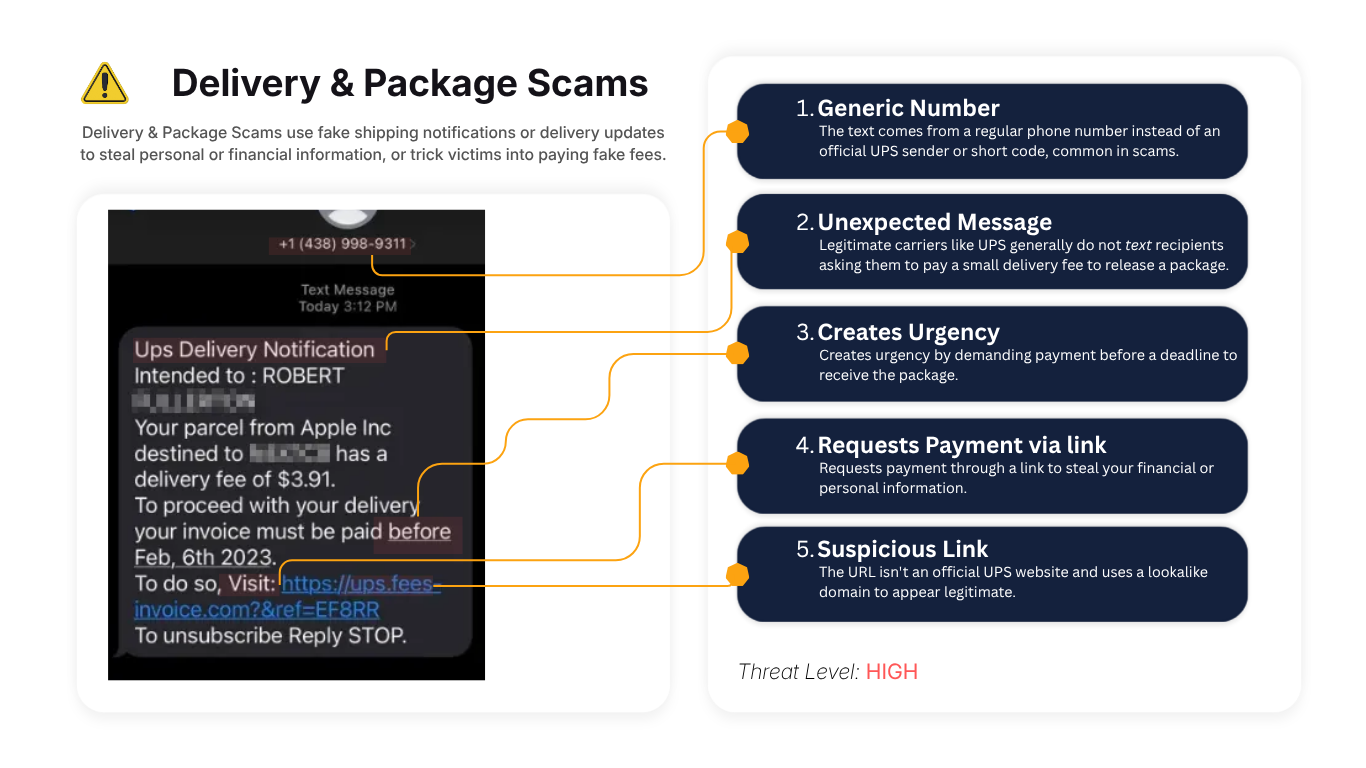
Example of a suspicious package delivery notification

What are Delivery & Package Scams?

Delivery and package scams use fake shipping notifications to steal your money or personal information. Scammers may pretend to represent delivery companies and claim there is a problem with your package.

Scammers may:

  • Send fake delivery failure notifications
  • Claim a package requires an additional fee
  • Use fake tracking links to steal personal information


Knowing the warning signs can help you protect yourself.

Legitimate Example

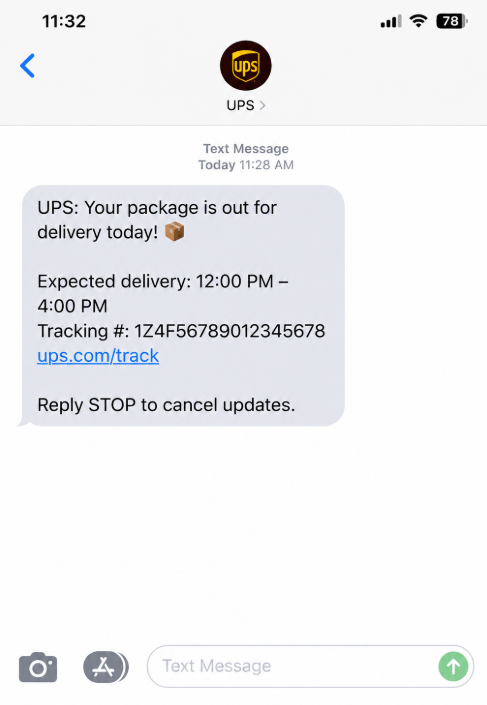
Example illustrating a legitimate package delivery notification

A real delivery notification provides accurate tracking information and directs you to the delivery company's official website or app. You can independently check your package status using a verified tracking number.

Scam Example

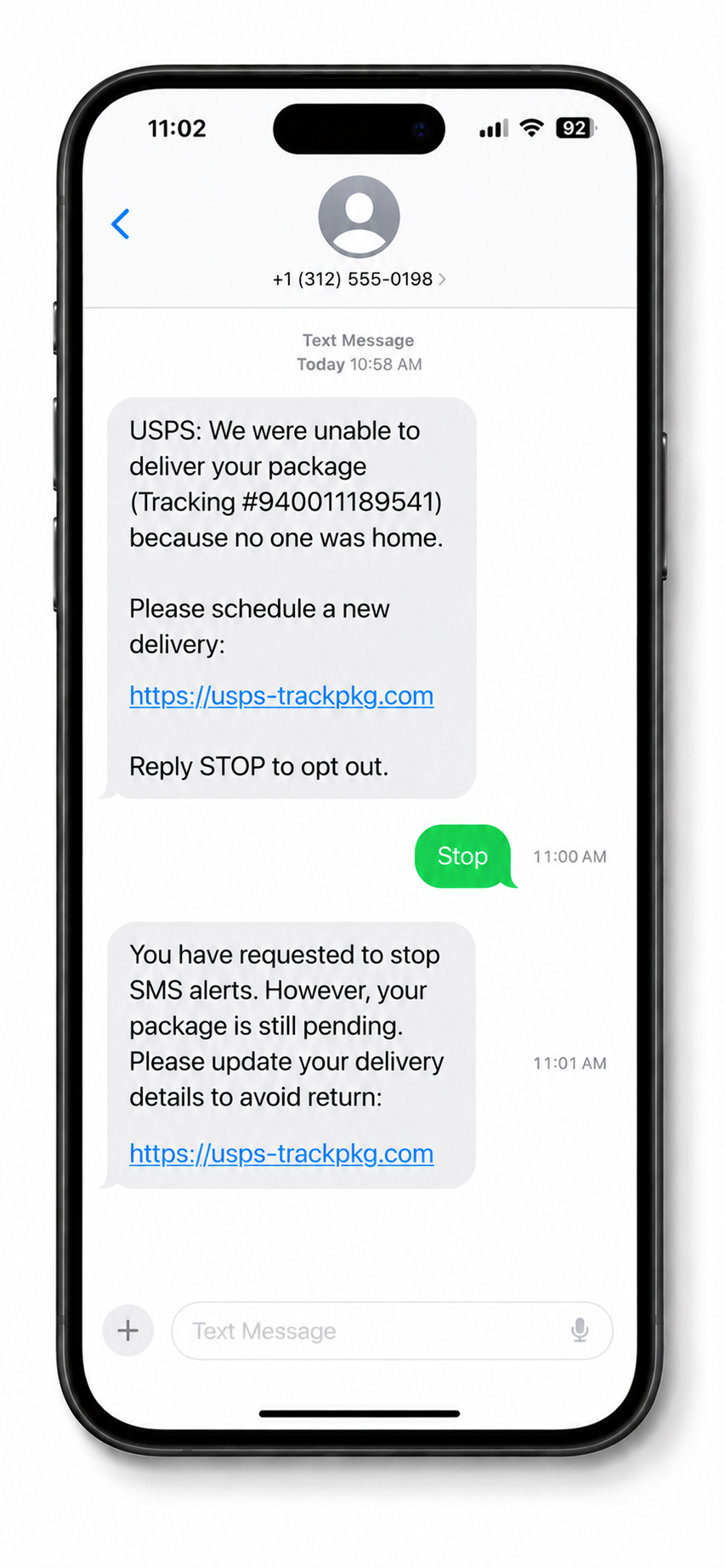
Example illustrating a suspicious package delivery text

A scammer may text you claiming your package is delayed, your address is incorrect, or a small redelivery fee is required. The message may include a suspicious link that leads to a fake website designed to steal your information.


Remember: Never trust an unexpected delivery message just because it mentions a package, even if you are expecting one.

How Delivery & Package Scams Work

Scammers impersonate delivery companies to make you believe there is a problem with a shipment. They then try to trick you into clicking a malicious link, paying a fake fee, or sharing personal information.


1. A Fake Delivery Notification

You receive an unexpected text or email claiming a package could not be delivered, is being held, or needs additional information.

2. A Suspicious Link or Payment Request

The message directs you to a fake tracking website and asks you to enter personal information, provide payment details, or pay a small redelivery fee.

3. Your Information or Money Is Stolen

After you submit your details or payment, scammers may steal your money, misuse your identity, or use your information for further fraud.

Common Spaces

Fake delivery notifications can appear in many places, including:


  • Text messages claiming a package is delayed
  • Emails pretending to come from shipping companies
  • Social media messages and fraudulent tracking websites

Common Targets

Anyone who receives packages can encounter a delivery scam. Scammers may target people who:


  • Frequently shop online
  • Are expecting deliveries or gifts
  • Are more likely to trust familiar delivery company names

However, it's important to know that anyone can fall victim.

What To Do

If a delivery notification seems suspicious, take these steps:


  • Do not click links or provide personal information
  • Check your package through the official carrier website or app
  • Report suspicious messages at reportfraud.ftc.gov
Warning Signs / Red Flags
  • Unexpected delivery messages: You receive a notification about a package you do not recognize or a delivery problem you were not expecting.
  • Requests for small payments: A message claims you must pay a redelivery, handling, or release fee through an unfamiliar link.
  • Suspicious links: The message directs you to a website with a misspelled company name, an unfamiliar domain, or an address that does not match the official carrier website.
  • Requests for sensitive information: A supposed delivery service asks for your password, full payment card details, or other unnecessary personal information through an unexpected link.
  • Pressure to act quickly: The message threatens that your package will be returned, canceled, or permanently held unless you act immediately.
  • Unusual sender details: The text comes from an unfamiliar number, or the email address does not match the delivery company's official domain.
How to Stay Safe
  • Track packages independently: Visit the carrier's official website or open its official app instead of following links in unexpected messages.
  • Do not trust every tracking link: Check the website address carefully before entering any information.
  • Be cautious with payment requests: Verify any claimed delivery fee through the official carrier before paying. Do not submit payment details through an unexpected text link.
  • Protect your personal information: Never provide passwords, verification codes, or unnecessary financial information to someone claiming to be a delivery representative.
  • Verify the sender: Contact the delivery company using contact information found on its official website, not information supplied in a suspicious message.
  • Delete suspicious messages: Do not reply, click links, or download attachments from unexpected delivery notifications.
What To Do If You've Been Scammed
  1. Stop interacting with the message. Do not click additional links, provide more information, or send further payments.
  2. Contact your bank or payment provider. If you entered payment details or sent money, explain what happened and ask whether the transaction can be stopped or reversed.
  3. Protect your accounts and identity. If you shared a password, change it immediately and update it anywhere else you reused it. If you provided sensitive identity information, visit IdentityTheft.gov for recovery steps.
  4. Report the scam. File a report with the Federal Trade Commission (FTC). You can also report suspicious texts by forwarding them to 7726 (SPAM) when supported by your mobile carrier.
  5. Save the evidence. Keep the suspicious message, sender information, website address, receipts, and payment records in case your bank or investigators need them.

Being scammed can happen to anyone. Acting quickly may help limit the damage, and reporting the incident can help protect others.

Quick Checklist

Frequently Asked Questions

How can I tell if a delivery text is real?

Check the tracking information through the delivery company's official website or app. Be cautious of unexpected messages that demand payment, request sensitive information, or pressure you to click a link. Do not use the link in the message to verify its legitimacy.

What if I am actually expecting a package?

Scammers often send messages that appear relevant to people who shop online. Even if you are expecting a delivery, do not assume an unexpected text is legitimate. Open the retailer's order page or the carrier's official website and check the tracking status independently.

Are delivery companies allowed to charge redelivery fees?

Some legitimate deliveries may involve fees under specific circumstances, but an unexpected text demanding payment is not proof that a fee is real. Check the shipment details and contact the carrier through its official website or app before paying. Never enter payment information through a suspicious link.

Don't wait until it happens to you.

Start Checking Messages