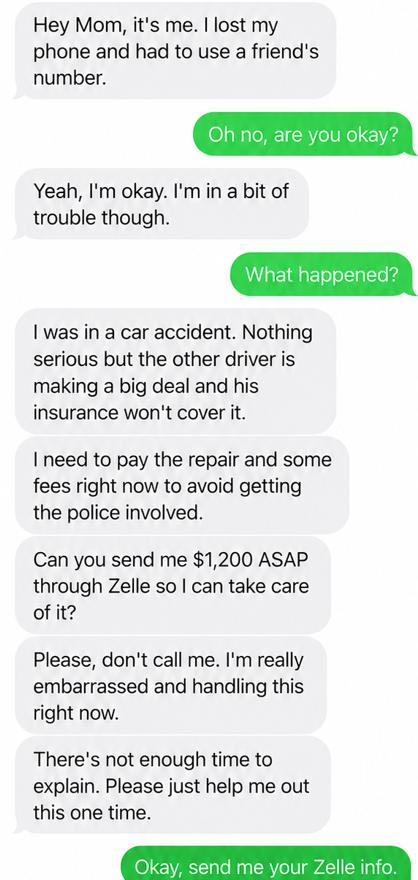
Example of a family emergency scam

What Are Family Emergency Scams?

Family emergency scams use fake emergencies to trick people into sending money or revealing personal information. Scammers pretend to be relatives or people helping a loved one in trouble. They may claim that someone has been arrested, injured, or stranded.

Scammers may:

  • Pretend to be a child, grandchild, or another relative.
  • Claim that a loved one needs emergency money.
  • Demand payment for bail, medical bills, or travel expenses.
  • Use AI-generated or cloned voices to impersonate family members.


Knowing the warning signs and independently verifying the situation can help you protect yourself and your family.

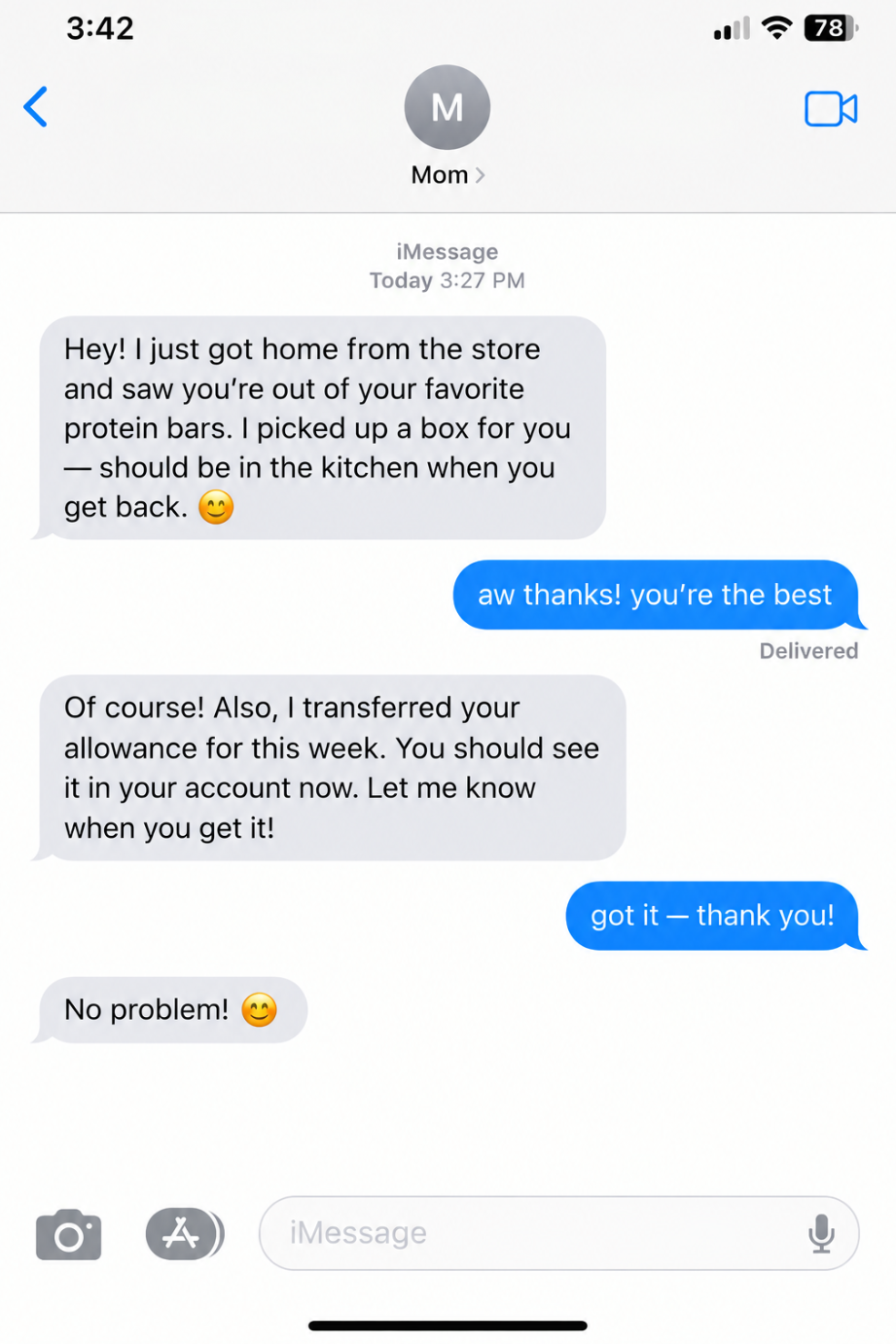
Legitimate Example

Example of a legitimate request for family assistance

A relative contacts you about a problem and gives you time to call them back. You contact them using a phone number you already know and independently confirm what happened before deciding how to help.
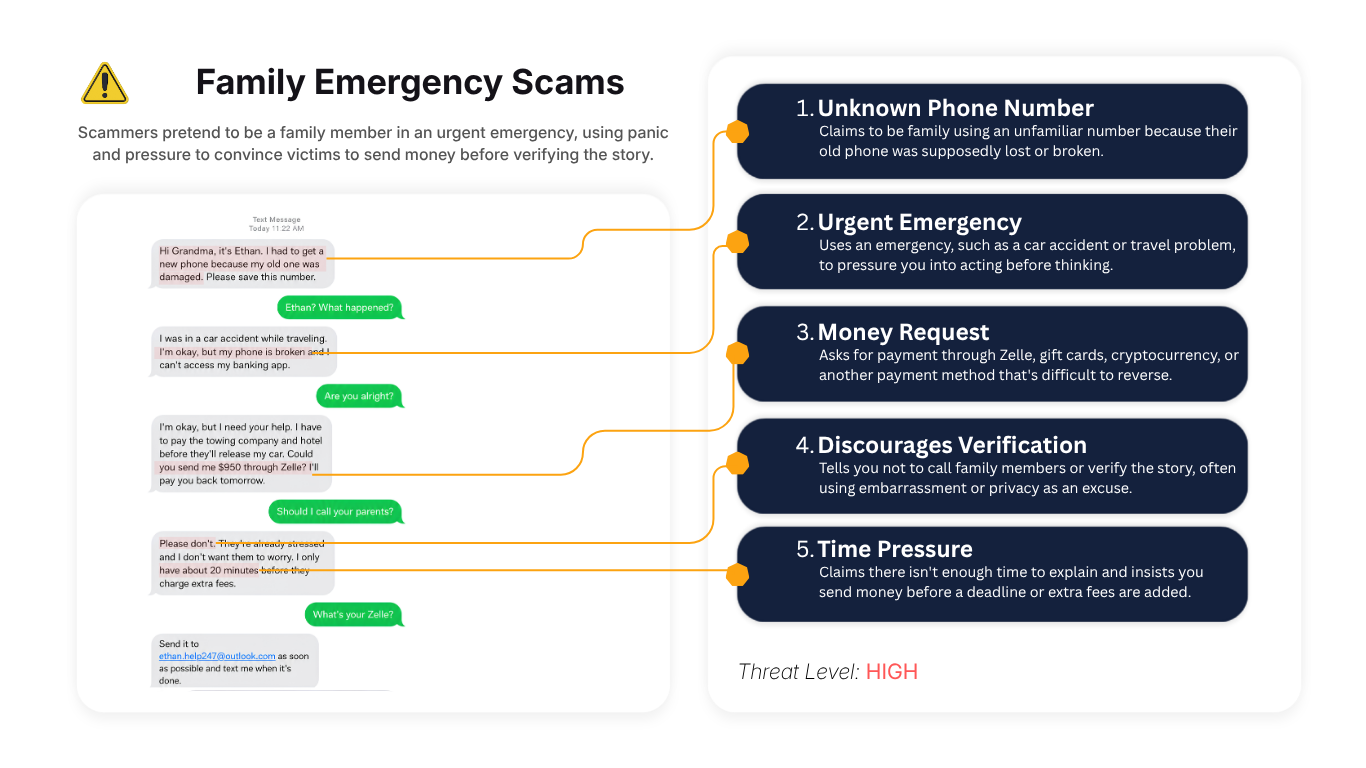
Scam Example

Example of a suspicious family emergency message

A message claims that your grandchild is in jail and urgently needs money for bail. The sender insists that you pay immediately and not tell anyone else. These demands for urgency, secrecy, and money are major warning signs.


Remember: even if a message sounds convincing or a voice sounds familiar, verify the emergency independently.

How Family Emergency Scams Work

Scammers create a convincing crisis to trigger fear and urgency. They then pressure you into sending money or sharing sensitive information before you have time to verify the story.


1. An Unexpected Message or Call

You receive a phone call, text, or online message from someone claiming to be a relative or someone assisting them.

2. A Supposed Emergency

The caller claims your loved one has been arrested, injured, stranded, or is facing another urgent problem.

3. Pressure to Send Money

The scammer demands immediate payment and may insist that you keep the situation secret or avoid contacting other relatives.

Common Scenarios

Family emergency scams may involve situations such as:


  • A relative supposedly needing bail money.
  • A loved one allegedly injured in an accident.
  • A family member supposedly stranded while traveling.
  • A caller claiming to be a lawyer, doctor, or police officer.

Who Is Targeted?

Anyone who cares about a family member can be targeted. Scammers may particularly exploit:


  • Grandparents and older adults.
  • Parents worried about their children.
  • People whose family information is publicly available online.

However, anyone can fall victim when a convincing emergency creates enough fear and pressure.

What To Do

If you receive a suspicious emergency request:


  • Stop before sending money or sharing information.
  • Call your relative using a known phone number.
  • Verify the story with another trusted family member.
  • Report suspected fraud at ReportFraud.ftc.gov.
Warning Signs / Red Flags
  • Urgent demands: The caller insists that you must send money immediately or something terrible will happen.
  • Requests for secrecy: They tell you not to contact other family members or discuss the supposed emergency with anyone.
  • Unusual payment methods: They demand gift cards, cryptocurrency, wire transfers, or other difficult-to-reverse payments.
  • Unverified identity: The caller refuses to let you call them back or avoids answering questions that could confirm who they are.
  • Suspicious details: Their story changes, details do not add up, or they provide contact information that cannot be independently verified.
  • Familiar but unexpected voice: Someone sounds like a relative but makes an unusual request for money. AI voice-cloning technology can be used to imitate people.
How to Stay Safe
  • Verify the emergency: Call your relative using a phone number you already have, rather than a number supplied by the caller.
  • Contact another trusted person: If your relative cannot be reached, contact another family member or someone who can independently verify the situation.
  • Create a family code word: Agree on a private phrase that family members can use to help verify unexpected emergency requests.
  • Never rush a payment: Take time to confirm the story, even if the caller claims there is no time to spare.
  • Limit personal information online: Public family details, travel plans, and personal posts can help scammers create believable stories.
  • Discuss scams with relatives: Make sure family members know to verify emergency requests before sending money.
What To Do If You've Been Scammed
  1. Stop sending money. Do not make additional payments, even if the scammer claims another fee is needed to resolve the emergency.
  2. Contact your bank or payment provider. Explain what happened and ask whether the transaction can be stopped or reversed. Act as quickly as possible.
  3. Secure exposed information. If you shared passwords or account details, change your passwords and contact the relevant financial institutions. If you shared identity information, visit IdentityTheft.gov for recovery guidance.
  4. Save the evidence. Keep messages, phone numbers, payment receipts, emails, and other information that may help an investigation.
  5. Report the scam. File a report with the Federal Trade Commission. You can also contact local law enforcement if money was stolen or you believe a crime occurred.

Being targeted by a scam can happen to anyone. Acting quickly may help limit financial losses and protect others from similar attempts.

Quick Checklist

Frequently Asked Questions

What is a family emergency scam?

A family emergency scam occurs when someone pretends that a relative is in trouble and urgently needs money. Scammers use fear and emotional pressure to convince victims to pay before verifying the story.

Can scammers imitate a relative's voice?

Yes. Scammers can use AI voice-cloning technology to imitate someone's voice using audio samples. If a familiar voice makes an unexpected request for money, end the call and contact the person through a known number.

What if the caller says my relative has been arrested?

Stay calm and independently contact your relative or another trusted family member. If the caller claims to represent the police or a court, find the organization's official contact information yourself and verify the claim.

Should I send money if the emergency sounds real?

Do not send money until you have independently verified the emergency. A convincing story, familiar voice, or knowledge of personal details does not prove that the request is genuine.

What should I do if I already sent money?

Contact your bank or payment provider immediately and ask whether the payment can be stopped or reversed. Keep all evidence and report the incident to the appropriate authorities.


Don't wait until it happens to you.

Start Checking Messages